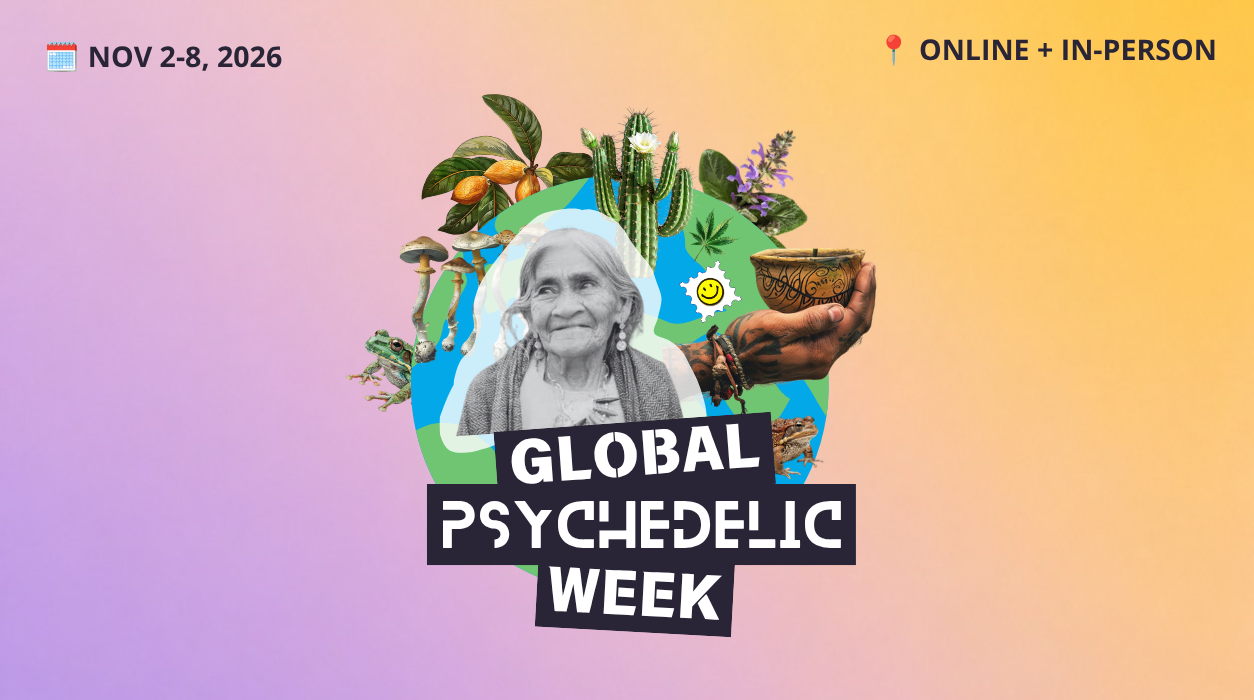
Global Psychedelic Week 2026 brought together 100+ speakers over four days of online panels and keynotes, alongside 70 in-person events from Beirut to Buenos Aires. The topics ranged from gut biology and longevity to ceremony, policy, billion-dollar deals and AI.
Yet across all of it, the same few ideas kept surfacing. Researchers, shamans, investors, veterans, mothers and regulators arrived at them from completely different directions. Here are the eight patterns that defined the week.
1. The experience is only the beginning
If one message echoed through every single session, it was this: the breakthrough is not the healing. What happens in the days, weeks and months after is.
Dr. Stefanie Kleine put it best: “Ceremony is the wedding. Integration is the marriage.” Sergio Rodriguez-Castillo called psychedelics wonderful teachers who won’t do your homework. Clara Parati reminded us the medicines only open the door, and it’s up to us to walk through it. MAPS co-executive director Betty Aldworth added the line many of us recognized ourselves in: millions began their healing journey on the dance floor, but she has never met anyone who ended it there.
The same truth showed up in very different rooms:
Addiction recovery. Milica Pajkovic was clear that ibogaine treatment and addiction recovery are not the same thing.
Science. Even the longevity researchers agreed psychedelics won’t do the work for us. As Vladislav Andreev said, the changes happen on Monday, Tuesday and Wednesday.
The body. Alia Offman trains clients in mindfulness for weeks before a session, so they can stay present with difficult sensations instead of being flooded by them.
Families. Maria Gonzales shared how her husband’s results faded partly because she, as his supporter, went in unprepared.
Integration isn’t an afterthought or an add-on. It is the work.
2. Community is the medicine
If integration is the work, community is where it happens. Speaker after speaker described the same scene: someone has a profound experience, goes home, and finds no one who understands. Their family worries. They feel more alone than before.
The Global Psychedelic Society panel named it directly. Isolation itself is a core problem, and community is the medicine. Jess Maude described people showing up to integration circles in Australia six months after a clinical trial, because their therapist offered only one or two follow-up sessions.
Some of the most moving moments of the week came from this theme:
Veterans. Gabriel Gonzales described big, tattooed veterans ending phone calls with “I love you.” Veterans bond in trauma, he said, but in this community they bond in love and healing.
Mothers. Alexa Jesse relived a traumatic birth while held by three women, and said that being held was as powerful as the medicine itself. Her ask to the field: offer childcare and family-friendly spaces.
Elders. Heather A. Lee’s circles of women over 60 are creating rites of passage into elderhood that our culture lost.
Collective healing. Dr. Crystyn Scott reminded us that Black and Indigenous communities have always seen healing as collective, not individual.
Betty Aldworth summed it up in her keynote: the news gets made at large scale, but the real work happens in community.
3. Psychedelics amplify. Discernment is everything.
Betty Aldworth called psychedelics nonspecific amplifiers, and the idea ran through the whole week. They magnify what is already there, the wisdom and the wounds, the insight and the delusion.
That makes discernment one of the most important skills in this space:
Journalist Mattha warned that psychedelics can produce “a mirage of the mind,” revelations that feel profound but shouldn’t be acted on. It’s a game of discernment.
Clara Parati suggested a simple question when an inner voice gets loud after a journey: who’s talking? Urgency, she said, is always an invitation to slow down.
Avilou Søby shared the story of a man who saw himself living alone and planned to leave his family. Through integration he realized he simply needed a space of his own in the home.
Daniel Shankin quoted an old tantric teaching: the same phenomenon that deludes the foolish liberates the wise.
Several speakers also named the shadow side: spiritual bypassing, ego inflation, and people who become facilitators weeks after their first ceremony. “The medicine told me to” is not a plan.
4. Science, not hype
The field is more excited than ever, and speakers were notably careful not to oversell it.
On longevity, Stephanie Price noted that a promising psilocybin study in aging mice is a long way from proof in humans. Mattha questioned whether the longevity hype is driven by billionaires who want to live forever, while most people simply need better quality of life. He also pointed out that much of the buzz rests on data from a single man, Brian Johnson.
The same caution came up elsewhere:
Microdosing. Amanda Gedeon Zeitounian challenged the idea that microdosing rewires your brain. You rewire your brain, she said, by acting differently.
Media. Joshua White of Fireside Project said many callers tell the support line they watched a documentary and didn’t realize how hard it would be.
Balance. Sharon Dopak warned that if enthusiasm outruns the science, the pendulum could swing back. Psychedelic clinical trials jumped from 47 (2006 to 2019) to 194 (2020 to 2024), but most doctors still rely on what they learned in school.
Magic pills. From Denmark to Australia, society leaders said a big part of their job is undoing the idea that psychedelics are a magic pill.
5. Access is the next frontier
With FDA approval closer than ever and Eli Lilly’s acquisition of AtaiBeckley making headlines, the question shifted from “does it work?” to “who will actually get it?”
The answers were sobering:
Approval is not coverage. Economist Elliot Marseille noted unofficial price estimates around $65,000 for a full course of treatment, and that most people switch insurance plans within about three years, before savings pay back.
Cost is more than day one. Gaetano Lardieri argued affordability means total cost and health over the years that follow, not the price at launch.
Demand will outpace care. Betty Aldworth’s biggest worry is that demand for approved treatments will far outrun qualified providers.
Medical models can exclude. In Australia, legal access exists but costs $25,000 to $30,000 privately, Jess Maude said, pushing people underground.
Systems, not just individuals. Irina Alexander put it plainly: systemic trauma needs to be fixed in systems, including housing, food and medical care.
There was hope, too. Natalia Fedulova pointed to the “missing middle”: the clinics, software, training and integration support needed to deliver care, and an open field for builders. Irina’s equitable pricing model, Cathy Jonas’s ongoing support groups in Oregon, and Aakriti Pant’s free community sessions in India all showed what access-first can look like.
6. Honor where the medicines come from
As psychedelic care becomes clinical and commercial, speakers kept asking what gets lost along the way. Dr. Crystyn Scott said it simply: these medicines weren’t discovered, they were carried. They were carried by Indigenous peoples and by enslaved Africans who held onto their healing practices under brutal conditions.
The Ancestral Wisdom panel reframed reciprocity. Nadira Kaimova said it isn’t a financial exchange, but a balance between what you give and what you take. Ryan James Kemp shared his uncle’s teaching: your whole life, you never own your breath, you only share it.
This wasn’t nostalgia. It had real consequences for policy and practice:
In Oregon, regulators nearly removed music from psilocybin sessions. Amy Charlesworth helped get it restored, noting that to a regulator a drum might sound like noise, but to medicine keepers it’s the ceremony.
Betty Aldworth acknowledged the FDA pathway isn’t built for traditional use, and said MAPS’s role is to listen, not instruct.
Pukar Makani Nepal argued for relationship rather than integration between Western and Indigenous medicine, so that each can stay whole.
Not every speaker agreed on how far the clinic can go. India Mayorga argued the clinical model cannot hold this work without initiation. Others saw room for both. But everyone agreed the people who carried these medicines deserve a seat at the table.
7. The practitioner is part of the medicine
If psychedelics amplify, then who sits beside you matters enormously. This came up in nearly every panel, and most clearly in the conversation on ethics and power.
Ashley Carmen told facilitators, “You are the container that your clients are stepping into.” She warned that most harm doesn’t come from malice, but from blind spots that look and feel like care. Valeria McCarroll added that neutrality is never neutral: every guide brings a worldview into the room. Michael Palmieri offered a simple practice: before offering your interpretation, ask for theirs first.
Training was a recurring concern:
Sergio Rodriguez-Castillo, who analyzed over 80 training programs, called the field a Wild West. We don’t need psychedelic technicians, he said, but general practitioners of the soul.
Florian Lanzer warned that if transformation becomes something you buy, psychedelics risk becoming a luxury wellness product.
Robert Lennox argued ego death is a leadership skill. If you move capital into this field without having moved yourself through the medicine, you’re not funding what you think you’re funding.
The common thread was humility. Do your own work first, keep doing it, and build systems of accountability around you.
8. AI belongs here, but only with a human in the loop
AI was one of the most talked-about topics of the week, and the tone was refreshingly grounded. No one argued AI should replace human support. Everyone agreed it’s already here, so the question is how to use it well.
Sabba Nazhand of Safar drew the line clearly: “The AI notices. The human decides.” He warned that chatbots are trained to please, and that fluent isn’t the same as truth. AI can simulate the journey, he said, but it can’t take it, because it has no self to come home to.
Other speakers offered practical guardrails:
Joshua White described Lucy, a simulator built from consented, anonymized support-line calls to help train facilitators, never to replace them.
Amanda Gedeon Zeitounian asks clients who integrate with chatbots one question: what has actually changed in your life? Usually, the answer is not much, because AI gives validation but no accountability.
Keith Gilmore cautioned against fear-driven doomsaying about both AI and psychedelics, saying fear tends to fulfill itself.
What comes next
Looking back, the week told a consistent story. The science is maturing, the money has arrived, and approvals are close. What’s still missing is everything around the medicine: integration, community, trained and grounded practitioners, fair access, and respect for the people who carried this knowledge for generations.
Betty Aldworth’s hope for five years from now is that more than half of Americans, and many more people around the world, have access to regulated psychedelic care held within a container. Getting there will take all of us.
As Betty said in her keynote: we are a movement, and you are part of it.
Thank you to every speaker, moderator, event host, partner and attendee who made Global Psychedelic Week 2026 what it was. The conversation continues in your communities until we gather again.
See you next year, November 1 to 7, 2027.
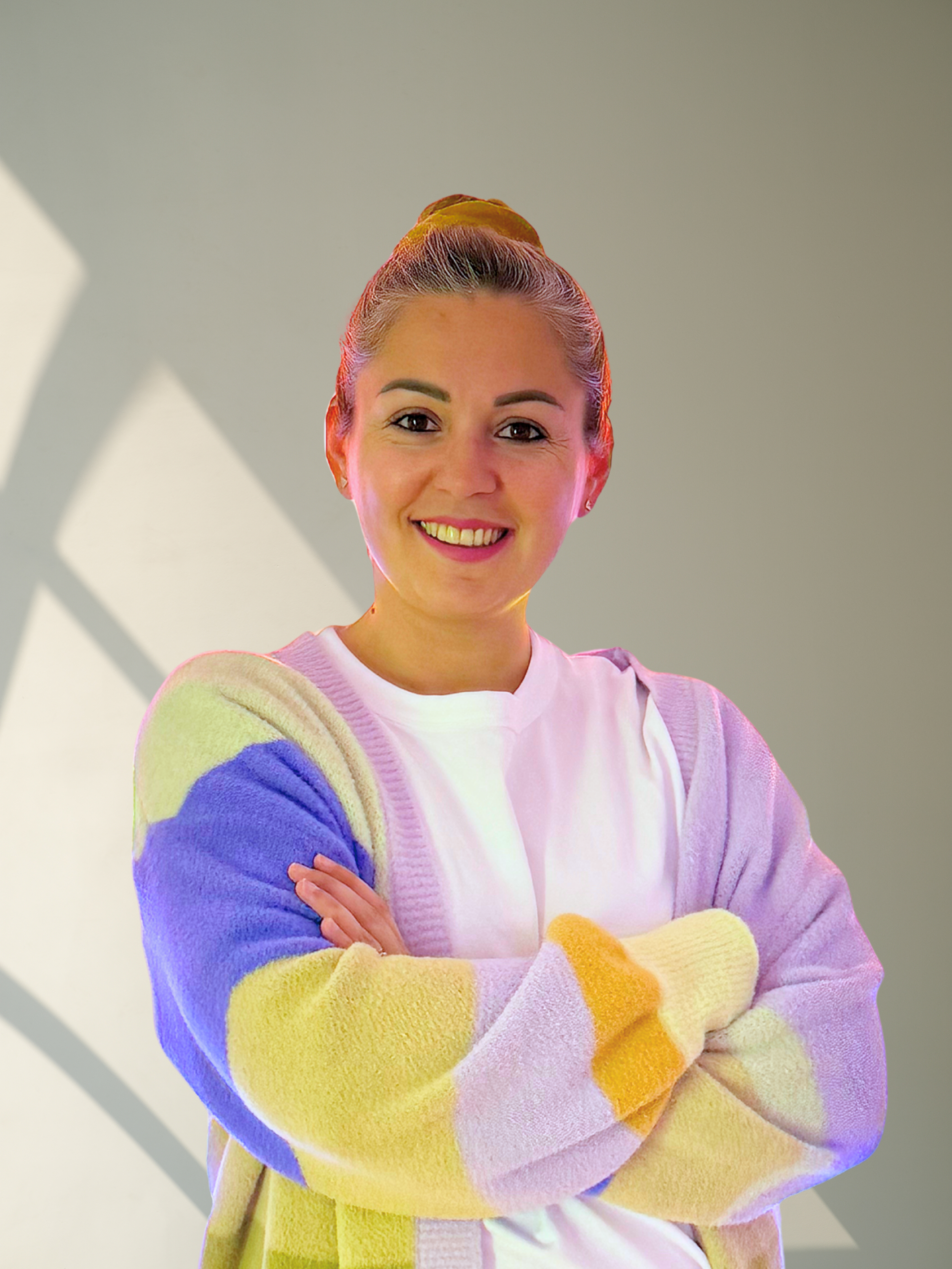
Milica Radovic Mandic
Milica Radovic Mandic works at the intersection of strategy, communication, and ecosystem-building in the psychedelic field. Through Signal Studio and Bizdelics, she advises startups, nonprofits, and research organizations, helping them become funding-ready, sharpen their positioning, and navigate the business, communications, and fundraising needs that come with building in a complex, emerging industry. She is also advisor and consultant to Chacruna Institute, UC Berkeley, UCSF, Sacred Plant Alliance and many other startups and non-profits.
Alongside her advisory work, Milica runs her own ventures in the space: she founded Psilocybin San Francisco, co-organizes Global Psychedelic Week, and hosts the Psychedelic Pillow Talk podcast.
She holds an MSc in Psychology with a focus on psilocybin and brings 15+ years of experience in events, strategy, and community building, including a successful company exit and six years as a TEDx licensee.
📍 San Francisco, CA